Art & Architecture
2026_Renovation in via Tracia, Rome
Residential renovation in Rome. 104 sqm
Architect: Marzia Fiume Garelli – FiumeArchitecture
Engineering Consultant: Dario D’Innocenzo
Photography: Francesco Catino - Catino Studio
Project Location: Via Tracia, Rome
Built in 2026
The Vision
At Fiume Architecture, we believe that every historic apartment holds a hidden narrative waiting to be rewritten for the modern era. Located in the heart of Rome, this 8th-floor residential unit within a landmark 1930s modernist complex presented a unique architectural challenge: a layout frozen in a rigid post-war configuration, characterized by fragmented, dark rooms and a labyrinth of inefficient corridors.
Our mission was to strip away decades of structural compromise, honor the building's historic shell, and weave a seamless, light-filled, and highly functional contemporary home tailored for 21st-century urban living.
Architectural Concept & Space Re-Engineering
The original 1948 layout suffered from compartmentalization, blocking natural light from penetrating into the core of the apartment. Fiume Architecture introduced a radical programmatic zoning concept that establishes a clear, elegant distinction between the social and private quarters.
1. The Social Core (The Living Open Space)
We demolished the outdated, winding entry corridors to orchestrate an expansive, sun-drenched Open-Space Living Room. By opening up the entrance, natural light now floods the interior directly from the main facade.
-
The Culinary Hub: The kitchen was strategically maintained near the existing technical plumbing stacks but was completely reimagined. We integrated a sleek, minimalist show-kitchen featuring a monolithic central island that acts as both a culinary workspace and an informal social hub.
-
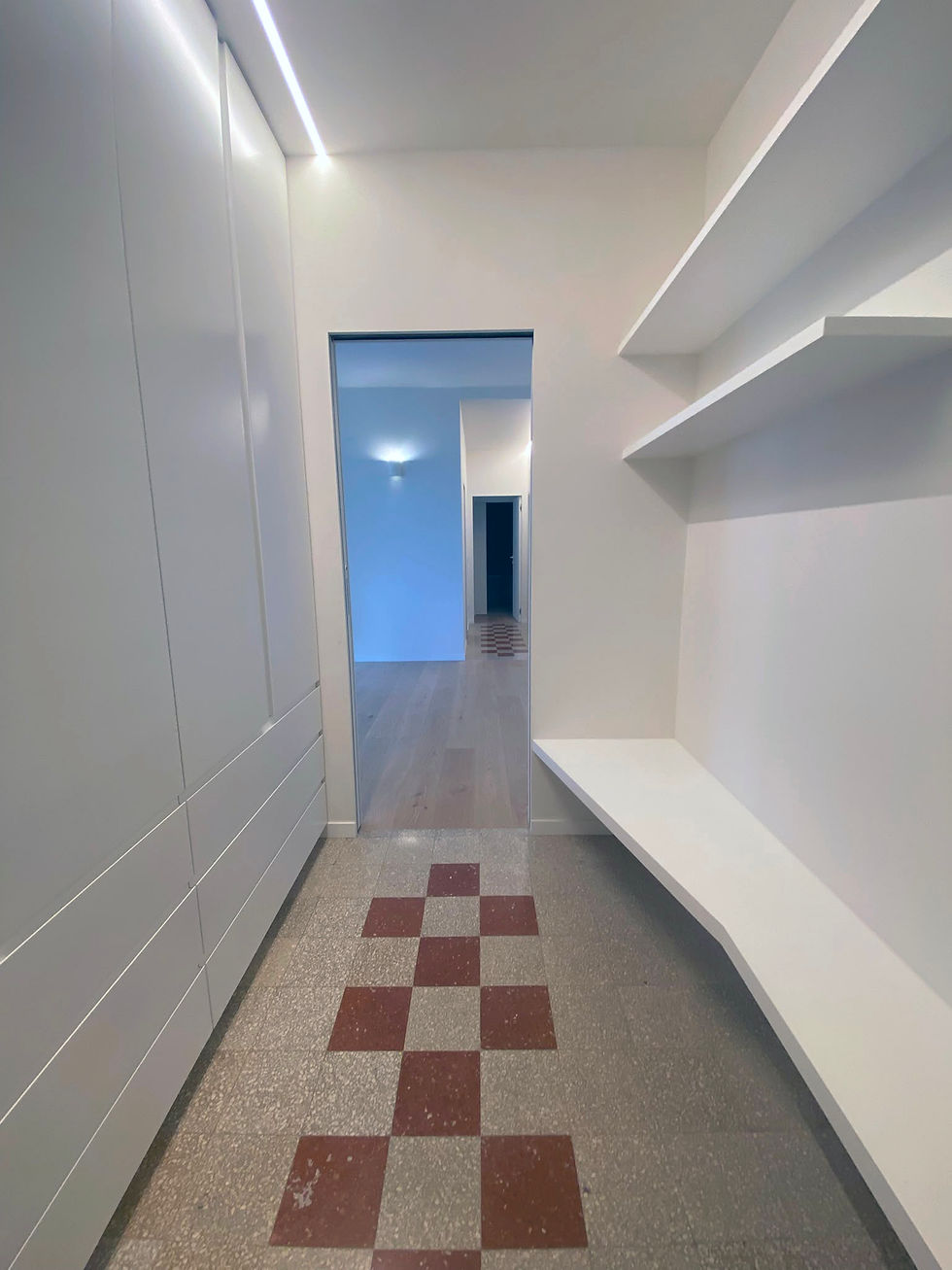
The Hidden Utility: Capitalizing on the building's historical structural recesses, we designed a concealed, floor-to-ceiling millwork wall that hides a laundry station, pantry, and smart home automation hub, keeping the visual lines of the living area entirely uncurbed.
-
2. The Private Sanctuary (The Night Zone)
A minimalist, acoustic-buffered transition door leads from the lively public space into the quiet, private quarters.
-
The Master Suite: Positioned within one of the building’s expressive architectural projections, the master bedroom is conceived as a boutique hotel suite, complete with a custom walk-in closet and a luxurious en-suite bathroom.
-
Flex Studio / Guest Room: The second bedroom was reproportioned to serve a dual purpose: a serene guest room and an ergonomic home office optimized for remote work, maximizing every square meter of available space.
-
3. Reimagining the Wet Zones
The old apartment configuration featured disjointed, poorly ventilated bathrooms. Fiume Architecture completely re-engineered these spaces into two bespoke architectural bathrooms:
-
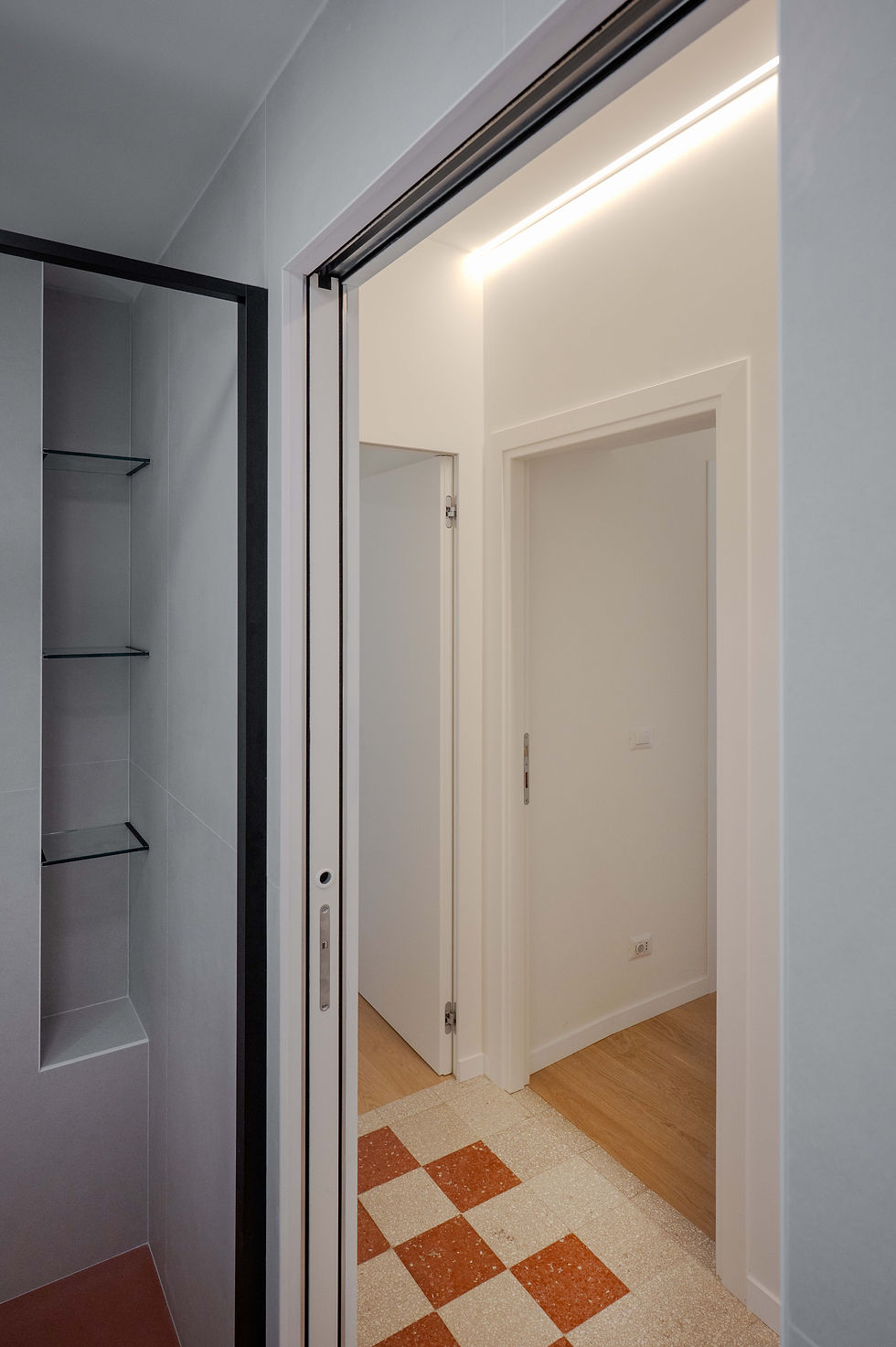
The Wellness Main Bathroom: Outfitted with a custom walk-in rain shower, floating fixtures, and integrated waterproof LED lighting bands. The building's original technical vertical shafts were structural liabilities; we wrapped them in custom water-repellent architectural plasterboard, turning an old engineering flaw into a clean, geometric design feature.
-
The En-Suite: A private oasis utilizing premium micro-cement and natural stone textures to evoke a sense of quiet luxury and relaxation.
-
Materiality, Technology & Craftsmanship
True luxury lies in the details. For the Via Tracia project, our material palette was curated to merge historic Roman elegance with industrial precision:
-
Continuous Flooring: To visually unify the apartment and amplify the perception of scale, we selected a single, continuous surface—premium engineered natural oak parquet—running seamlessly across all living spaces and bedrooms.
-
Architectural Lighting & Domotics: A fully integrated smart home system (Conforming to CEI standards) allows the client to control automated climate zones, motorized solar shading, and ambient architectural LED lighting scenes.
-
Thermal & Acoustic Engineering: Living in a historic building shouldn't mean compromising on comfort. We installed state-of-the-art ducted climate control systems hidden within architectural dropped ceilings. High-performance, thermal-break minimalist windows and multi-layered rockwool insulation along the shared stairwell walls guarantee absolute thermal efficiency and acoustic privacy from the bustling city outside.
-
Flush-to-Wall Doors: All interior doors are custom-fabricated rasomuro (flush-with-wall) doors, painted identical to the walls, ensuring that transitions between spaces remain completely flush, seamless, and visually silent.